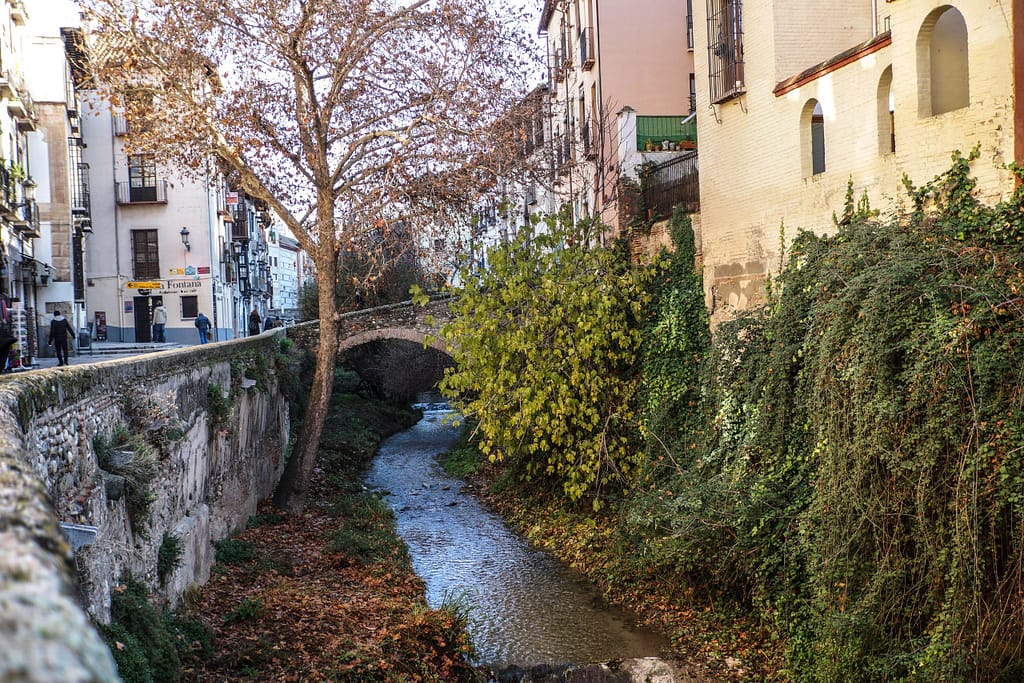
The neighborhoods of Albaicín and Sacromonte
The Albaicín and the Sacromonte , true treasures of Granada, invite you to immerse yourself in their charm through this article. Discover the essence of these emblematic neighborhoods, with their labyrinthine streets and the rich history that surrounds them. If you are interested in delving deeper into these fascinating places, we encourage you to keep reading. Welcome to the authentic essence of Granada!
Origin of the Albaicín Neighborhood
- The Axares irrigation channel watered the crops and originated from a diversion of the Darro River.
- The Aynadamar irrigation channel. This brought water from a spring known today as "Fuente Grande," located in the small municipality of Alfacar.
The Aynadamar irrigation channel, about 15 kilometers long, was built up to the upper part of the Albaicín. From here, and through various channels, water was distributed to 26 cisterns. These cisterns provided water to the city from the 11th century until the 19th century, when the neighborhood was declared a UNESCO World Heritage Site. Initially, irrigation techniques only watered orchards. Gradually, they were also used to supply water to the population.
How to explore the Albaicín?
If you want to immerse yourself in the authentic essence of the city, we recommend exploring the fascinating Albaicín Neighborhood .
And don't hesitate!
Fear nothing. All the streets of the Albaicín ascend and descend, and you will always find your way. In your pilgrimage, you will discover the vibrant heartbeat of a truly unforgettable neighborhood.
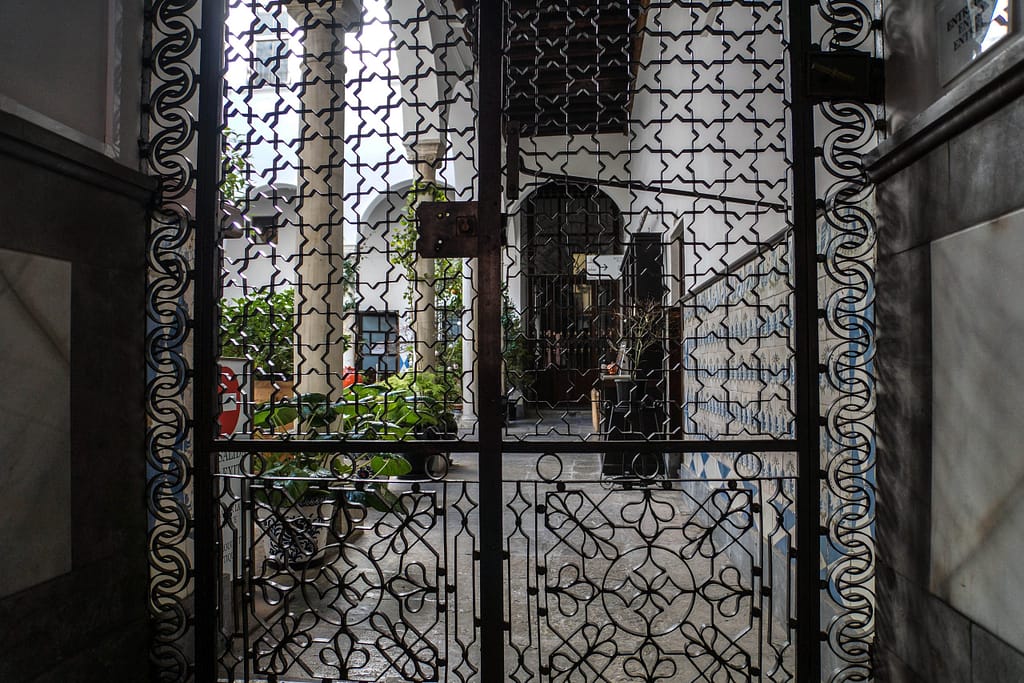
This district is characterized by its narrow and labyrinthine streets, filled with houses known as cármenes . These buildings, modest on the outside, come to life on the inside. The carmens retain the structure of the old Muslim houses, with rectangular courtyards, pools, and rooms on the sides. The etymology of the word "carmen" comes from the Arabic term "Karm", which means vine, a plant that used to be planted in these beautiful courtyards to provide shade.
During the Nasrid period, the neighborhood housed a considerable number of mosques and Arabic baths, known as hammamHowever, following the Christian conquest and the Christianization of the last Muslim kingdom, many residents abandoned the area, resulting in a significant decline in the indigenous population. Baths, mosques, and small houses were demolished, and in their place, churches, convents, and large mansions were erected.
Main Monuments of the Albaicín Neighborhood
There are several fascinating ways to discover the charm of the Albaicín, and to begin our itinerary, we will explore the lower part. Next, we will point out the most outstanding monuments that you should not miss in the Lower Albaicín.

Real Chancillería
The Real Chancillería of Granada , a Renaissance-style building constructed by order of Philip II, served as the Superior Court of Justice and had jurisdiction over the courts of Extremadura, La Mancha, Murcia, Andalusia, and the Canary Islands. The building is notable for its impressive two-story façade, beautiful courtyard with columns, and majestic staircase.
This majestic building was declared Cultural Heritage Site in 1977 and currently serves as the headquarters of the Superior Court of Justice of Andalusia. The intriguing history of the Chancery, with uses that included functions as a prison and place of executions, has created an aura of mystery. It is said that its hallways harbor ghosts and the spirits of the condemned, while executioners, like the famous «Maestro Lorenzo» still seem to seek justice from beyond the grave.
House of the Pisa
House of the Pisa Located behind the Royal Chancery, it is a 16th-century building known for being the place where San Juan de Dios, died. Built by the Pisa family shortly after the Reconquest of Granada in 1492, the house has played a prominent role in the city's history, housing San Juan de Dios until his death on March 8, 1550.
After the disappearance of the Pisa family in the 19th century, the Hospitaller Order of Saint John of God acquired the building in 1927, considering it an invaluable element of their heritage. Currently, The Casa de los Pisa currently houses the San Juan Archive-Museum. of God, a cultural center managed by the Bética Province of the order.
This museum, established in January 1931, aims primarily to ensure the knowledge and preservation of the cultural heritage of the Hospitaller Order. It seeks to disseminate historical richness for pastoral, scientific, and educational purposes. Alongside the museum, there is a nursing home that follows the hospitaller tradition of San Juan de Dios, providing assistance to 85 residents.
Cadí Bridge
In front of the Bañuelo, the remains of Cadí Bridge, a structure from the 11th century vital during the Nasrid era by connecting the Albaicín and the Alhambra over the Darro River. Unfortunately, destroyed in the 17th century, today only one tower remains standing, offering a glimpse of the original majesty.
Located over the Darro River, it can be observed from the Carrera del Darro. One of the two abutments and the start of a large horseshoe arch remain standing. The ashlar masonry shows cuttings for the formwork and the gate that closed off the passage over the river. The vault features polychrome voussoirs, nacelle impost blocks, and an alfiz. At the base, a linteled door and internal stairs evidence its functionality.
This bridge was key in the relationship between Muslim Granada and the Darro River, cited in ancient writings. However, Torres Balbás Suggests that the current remains correspond to the Tableros Gate from the 9th century, closing off the river with gates and connecting with corachas (small boats) in the Alcazaba Qadima and Alcazaba Yidida. Currently, the Cadí Bridge is part of the management perimeter of the Alhambra.
The Bañuelo
Arab Baths. The Bañuelo In Granada, dating back to the 11th century, located on Carrera del Darro, is one of the few Arab baths that survived the destruction by the Catholic Monarchs. Although many baths were demolished after the Christian conquest due to being considered impure, El Bañuelo, owned by a Granadian noble, avoided demolition.
Currently, they can be visited for free on Sundays. They are located in the lower part of a private house and exhibit the refinement of Spanish Arab architecture from a thousand years ago. Despite a house being built over them after the Christian occupation, El Bañuelo was declared National Monument in 1918, and its restoration was carried out by the architect Torres BalbásIts size, good state of preservation, and the beauty of its Arab-style arcades are surprising.
This public bath, built in the 11th century, is the oldest, most important, and most complete in Spain, representing one of the oldest works of Muslim Granada.
The access is through a small house renovated in the Christian era, and the rectangular floor plan features concrete walls with brick vaults illuminated by octagonal and star-shaped skylights.
House of Zafra
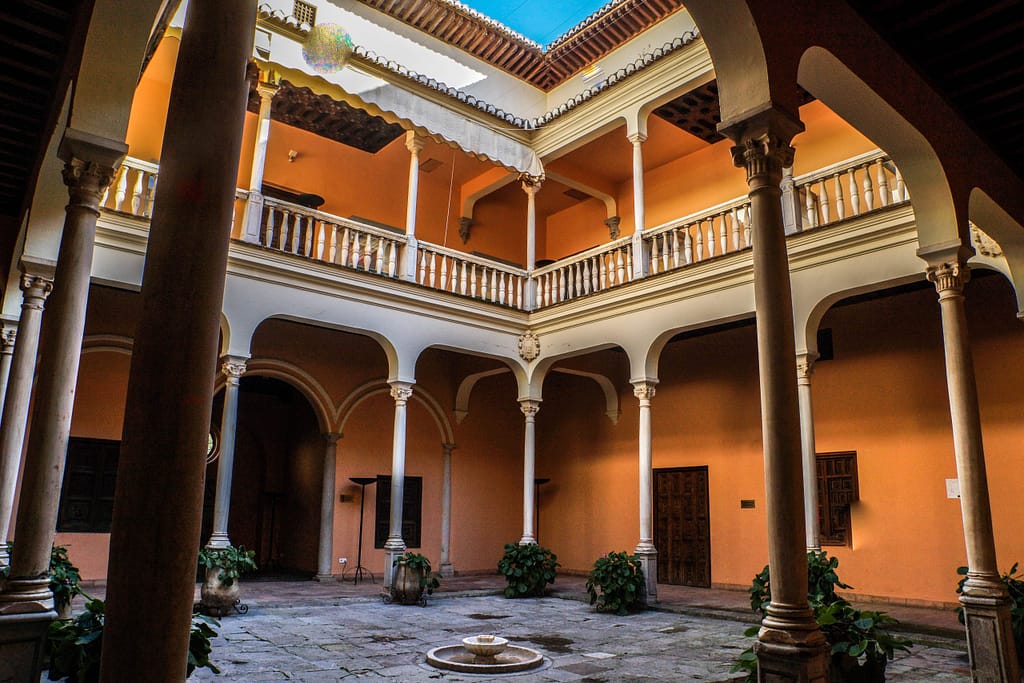
House of Zafracurrently occupied by Dominican nuns, public access is only permitted in the House of Zafra, where one can enjoy the interior of a morisco house. The highlight is the possibility to acquire pastries made by the nuns. Built in the 14th century, it was ceded by Isabel the Catholic to Mr. Hernando de Zafra and after his death, his wife Leonor Torres built the convent St. Catherine of Siena, preserving the House of Zafra almost intact.
The building follows the scheme of a Nasrid urban palace with a beautiful courtyard, pool, and decorated arcades. The upper floor, added in the 15th century, features painted decoration and remnants of Nasrid plasterwork. The central courtyard served to communicate and ventilate the rooms, while the latticework provided privacy. The house hosts prominent elements such as a railing and Nasrid plaster panels.
Made known in the 19th century, House of Zafra it was acquired by the city council in 1946 and declared Cultural Heritage Site in 1977After various restorations, it currently houses the Albaicín Interpretation Center, serving as the gateway to the World Heritage neighborhood since 1994. Visiting is recommended to appreciate this architectural and cultural treasure.
Convent of the Conception
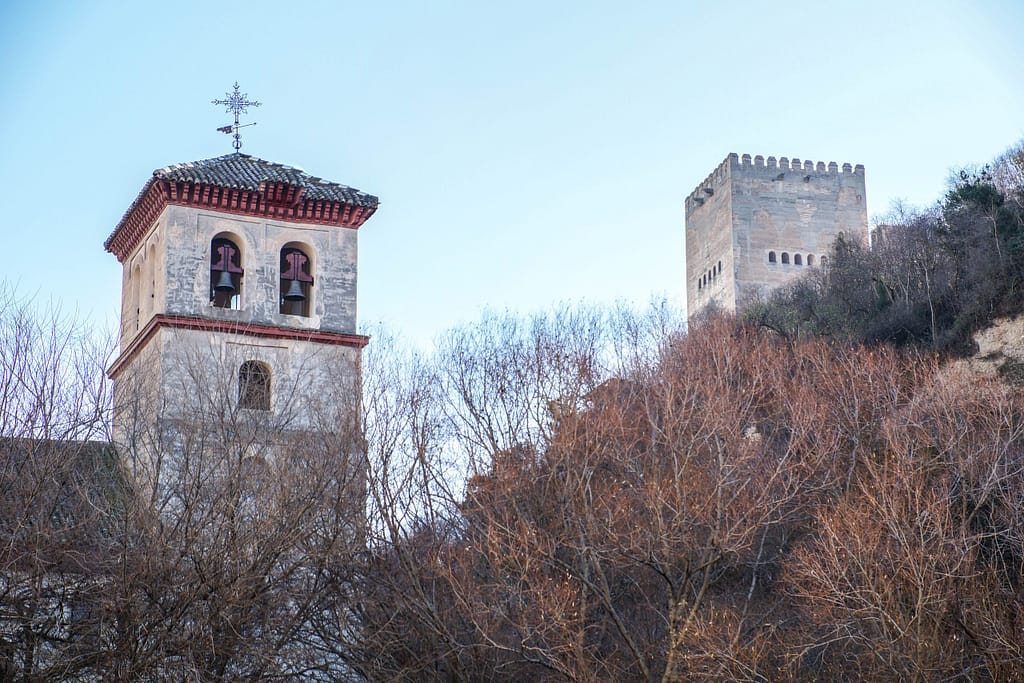
Church of Saint Peter and Saint Paul
Palace of the Córdova
Palace of the Córdovaoriginally located in the Placeta de las Descalzas, was moved and reconstructed in its current location. Built between 1530 and 1592, it was the residence of the Córdova family, descendants of the Gran Capitán. Throughout its history, the palace had various uses, including factory and warehouse
Demolished in 1919, it was bought by Ricardo Flores and used as a tenement house. In the 1960s, thanks to the intervention of the mayor, it was reconstructed at its current location between 1965 and 1967. The palace, with two floors and a tower, surrounded by gardens, features a unique architecture that combines Renaissance and Mudéjar styles.
Acquired by the City Council in 1983, it houses the Municipal Archive of Granada. Its rooms and gardens are used for events, and the exteriors are freely accessible. The history and architecture of the Palace of the Córdova make it a must-visit when strolling through Granada.
House of Chapiz
House of Chapiz, bilt in the 16th century, is the current headquarters of the School of Arabic Studies. Located on the Cuesta del Chapiz, the house has a rich history dating back to the Moriscos Hernán López "el Ferí" and Lorenzo "el Chapizwho remodeled it by merging Arab and Christian elements.
There is speculation about its origin, suggesting that it was a palace of Ibn al-Jatib or a Nasrid almunia owned by Hernán López el Ferí. After passing through various hands, it was confiscated in 1571, and in 1919, it was declared Historic-artistic monument and acquired by the State.
House of Chapiz It occupies more than 6000 square meters and consists of two residential cores around courtyards, with an Andalusian structure without windows to the exterior. One of the houses, associated with Lorenzo el Chapiz, features a large rectangular courtyard with a pool, wooden galleries, and an upper floor added later. The other house, of Hernán López el Ferí, is smaller and has two floors with wooden porticoed galleries and a small cistern.
Acquired by the City Council in 1983, the house del Chapiz has the School of Arabic Studies and can be visited for a fee of 2€ from Monday to Saturday, being free on Sundays. Its unique architecture and rich history make it a fascinating place to explore in Granada.
Carmen of the Victoria
Carmen of the Victoria, the Carmen de la Victoria", currently a university residence, was built in 1944 on the remains of a convent expropriated during the disentailment, which had previously served as a prison and hospital. Although the visible structure is from the 19th century, its foundations contain centuries of history.
In Muslim times, the area housed 'cármenes' on both sides of the wall known as the 'cerca de Axares'. After the Castilian conquest, the friars of the Order of Minims of San Francisco de Paula established the Convent of La Victoria in 1509. After the disentailment in the 18th century, the convent went through various uses and deteriorations until its demolition in the late 19th century.
In 1937, he built a orphanage on the site of the convent. In 1944, the University of Granada The University of Granada acquired the plots, and the current Carmen de la Victoria was built in 1945, designed by the architect Miguel Olmedo Collantes. The gardens were landscaped in the 1940s, overseen by Francisco Prieto Moreno, following the dominant regionalism of the time.
The carmen features a cypress-lined promenade, fruit trees, and fountains. Among its notable elements, there is a structure called «bailarina», composed of cypress trees forming arches around a central fountain. This type of structure was popular in the 19th and 20th centuries.
The back of the old convent, where the friars' cemetery was located, has been the scene of unexplainable phenomena. According to accounts, during the construction of the flamenco cave, human remains were unearthed. There are testimonies of unsettling experiences, such as the sight of a human head suspended in the air, the appearance of three elegantly dressed individuals, and sightings of a silver-white female silhouette gliding and floating near the ground. These accounts suggest the presence of paranormal phenomena at the Carmen de la Victoria.
The Sacromonte
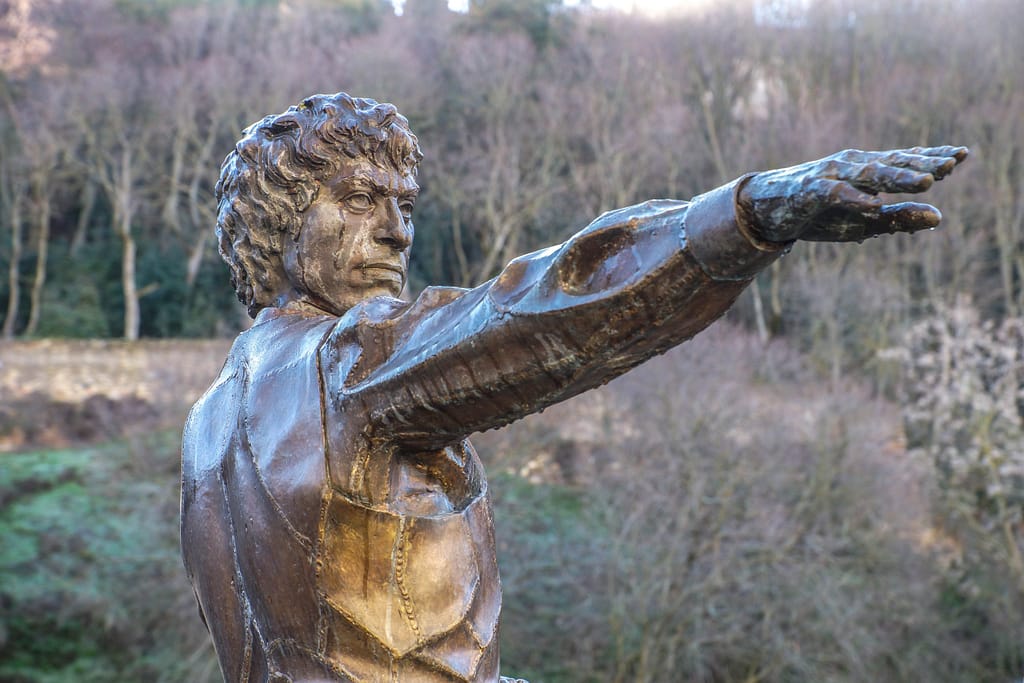
After visiting the Carmen of the Victoria you will see to your right a path preceded by the "Prince of the Gypsies". This sculpture pays tribute to the figure of Mariano Fernández Santiago (1824-1906)a gypsy known by the nickname of «Chorrojuno»This popular man gained fame when he was portrayed by the painter Mariano Fortuny with a Goyaesque gypsy costume in the year 1868. He knew how to take advantage of his "disguise" by proclaiming himself "King of the Gypsies". He thus exchanged his former, hard work in the forge for what is now known as storytelling or storyteller. He devoted himself to telling stories of the Alhambra the tourists who listened to him mesmerized.
The mentioned sculpture marks the entrance to the iconic neighborhood of Sacromonte. The path to Sacromonte is filled with flamenco zambras or caves that nowadays offer extraordinary flamenco shows. The frequency and quality of these performances support an uplifting business model for the families that inhabit them.
Many of these zambras, apart from having a marked tourist character, still retain their ancient essence as dwellings.
If you are interested in immersing yourself in the daily life of the inhabitants of this area, we recommend you to visit the Sacromonte Caves MuseumThe Sacromonte Caves Museum is a space worth visiting. It consists of a set of 10 caves that provide information about the life experiences of the inhabitants of these enclaves, as well as details about the history of flamenco.
A unique experience that will transport you to the past!
Continuing our journey to the end of the road, at the top of the mountain, you will find the Sacromonte Abbey.
Sacromonte Abbey
Sacromonte AbbeyFounded in the 17th century by the Archbishop Pedro de Castro Cabeza de Vaca y Quiñonesrises as a must-visit destination in Granada. This monumental complex offers guided tours to explore its Ecclesiastical Studies College, church, library, museum, and Holy CavesLocated on Mount Valparaíso, the abbey houses catacombs where suffered martyrdom Saint Cecilio, Patron Saint of Granada.
The architectural complex, built in the 17th century, comprises the abbey, the seminary, and the collegiate church. The highlights include Mudéjar coffered ceilings and Renaissance roofs of the chapels, while the church features a Latin cross plan. Its cloister, with Tuscan galleries and columns, offers a fascinating historical testimony. The museum exhibits works by artists such as Goya and possesses relics such as the codex of Saint Juan of the Cross and the leaden books.
Although a fire in the year 2000 affected part of the heritage, Sacromonte Abbey it remains a cultural treasure. The Romería of San Cecilio, with culinary and festive traditions, is celebrated annually near the abbey.
After exploring the Bajo Albaicín and the Sacromonte, we suggest you return along the same route and head towards the Upper Albaicín. This way, you can continue enjoying this fascinating journey through the historic area.
Upper Albaicín
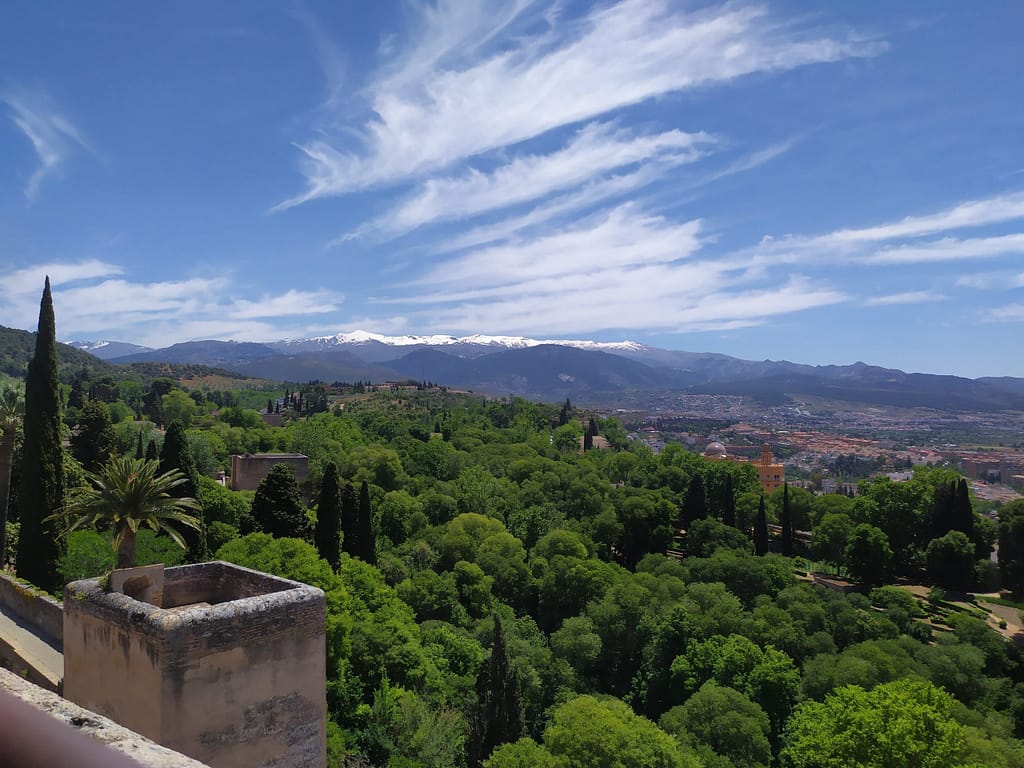
After exploring the Lower Albaicín and the Sacromonte, we suggest heading towards the Church of El Salvador and continue until you reach the San Nicolás ViewpointFrom this point, you can enjoy one of the most impressive views of the Alhambra, and Granada, with the majestic Sierra Nevada as a backdrop. This iconic viewpoint is a must-visit for photographers, tourists, and lovers of the beauty of Granada. Make sure to capture this unique experience during your visit to the city!
Next to the San Nicolás viewpoint is the the Mosque, which opened its doors to Muslim prayers in 2003, five hundred years after their expulsion.
The Mosque of Granada maintains an open-door policy throughout the year. The gardens are available to the public daily from 11:00 to 19:30, and the Islamic Studies Center is open from 9:30 to 13:30.
The great Mosque of Granada welcomes groups, schools, faculties, and other associations, adapting the content of the visit according to educational interest.
We continue the tour through the historic neighborhood of Upper Albaicín. Here you can immerse yourself in the authentic atmosphere of Granada, with its narrow cobblestone streets and charming squares, until you reach «Plaza Larga» is a landmark in this neighborhood, where the first fortress of the city was erected. Today, it is a lively space with various shops and bars that offer an authentic experience. We recommend making a brief stop at this square to enjoy its unique atmosphere.
From the lively Plaza Larga, we invite you to cross the Puerta de las Pesas, one of the oldest constructions in the city.
La Puerta de las Pesas, also known as Puerta Nueva or del Ensanche, is a historic entrance next to Plaza Larga, part of the ancient wall that surrounded the Alcazaba Qadima. Its name comes from depositing confiscated defective weights, after the repopulation of the Albaicín in the 16th century. The square became the center of the Albaicín, independent from the lower city. A commemorative plaque from 1576 marks this transformation.
Also called Puerta Nueva, it is believed to have remained closed due to prophecies. When it reopened, it received this name. Its dating is associated with the Almoravid invasion after establishing the capital in Granada. Adjacent to a tower, it features a facade with overlapping horseshoe and semicircular arches, a passageway with a sloping vault, and an interior half-point opening. The horseshoe arch stands out with stone voussoirs and an alfiz with a brick lintel, similar to Puerta Monaita. The internal gateway, towards the Alcazaba, has a semicircular arch with a key of laid bricks, being considered one of the first gates in the bend of Hispano-Muslim architecture.
The Palace of Dar al-Horra, Located in the Callejón de las Monjas in the Albaicín, the Palace of Dar al-Horra is a lesser-known Nasrid treasure. Built in the 11th-century Alcazaba Qadima, it stands out for its connection to Queen Aixa, mother of Boabdil, who inhabited it after feeling marginalized by her husband Muley Hazen. This love triangle influenced the division of the Nasrid kingdom. After the Conquest, it was ceded to Hernando de Zafra and later integrated into the monastery of Santa Isabel la Real. Two floors, a tower, and a beautiful central courtyard with galleries of horseshoe arches compose its architecture.
One of the peculiarities you will find when touring this neighborhood are its beautiful viewpoints, many of them hidden. For that reason, we want to point out to you the ones that we consider most special.
The best viewpoints in the Albaicín:
- San Nicolás Viewpoint
- Mirador de San Cristobal
- Mirador Placeta de Conception
- Mirador Placeta del Cumin
- Mirador de Carvajales
- Mirador Cruz de la Rauda
Before finishing, you should explore the part that houses the oldest gates and entrances of the city. You should head towards San Miguel Bajo from where you can walk to the Puerta Monaita, the oldest of Granada. Thou shalt go down quickly, finally, from here, until the Elvira Arch.

 ENG
ENG  ES
ES 


