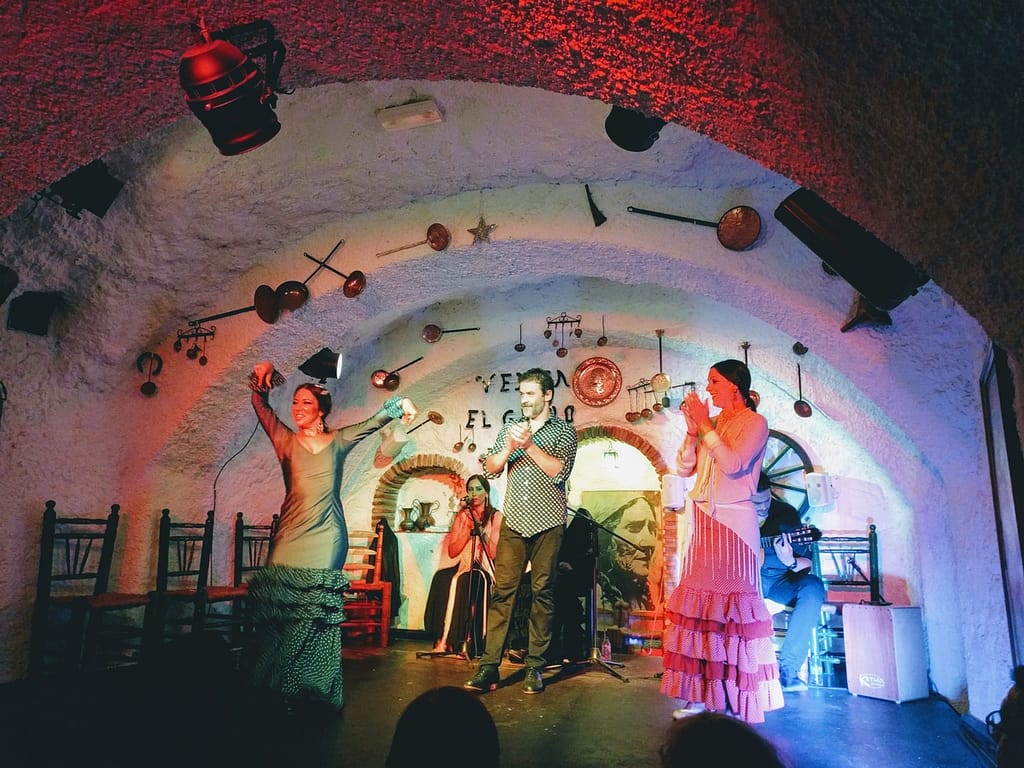
Flamenco in Granada

Dec 18 2023
Flamenco en Granada

The Origin of Flamenco

Flamenco is an artistic expression originating from the region of Andalusia. It is a cultural manifestation resulting from the influence and blending of various cultures: Arab, Jewish, and Christian It integrates the fusion of vocal music, the art of dance, and musical accompaniment known as cante, baile, and toque. It is characterized by its inspiring power to convey emotions, which is why it was declared as Intangible Cultural Heritage of Humanity by UNESCO in 2010. .

Flamenco singing is typically performed by a man and/or a woman, often seated. The lyrics express a broad range of emotions and moods: passion, restlessness, joy, anguish, love, or heartbreak. These sensations reach their peak through sincere and expressive words, endowed with conciseness and simplicity.

The DanceIt exudes a significant degree of personal improvisation, projecting through the spontaneous expressions of each emotion by the performer at every moment of their rendition. The Footwork flamenco is an essential part of the dance. The dancer becomes a musician, and their musical instrument is their feet adorned with flamenco shoes. The Sound the percussion is achieved with the sole, the nails on the tip of the footwear, and the heel. It's a highly specific and virtuosic technique that always depends on body posture, musicality, strength, and speed The Guitar Playing flamenco guitar playing has transcended its original role as accompaniment for singing. It is also accompanied by other instruments and sounds such as castanets, heel beats, and hand claps..

Flamenco Palos

Each of the styles or forms within flamenco is called palosThere are more than fifty different 'palos' based on their origin, metric, rhythm, type of accompaniment, or purpose, among other characteristics.

Below, we list some of the most common ones:

  • Sevillanas:

Likely one of the most popular and widely spread flamenco forms, even internationally. They are cheerful and often danced in pairs. Perhaps due to this, they are very common at fairs and celebrations.

  • Bulerías:

Is the suit more flexible. Stand out among its features, its fast pace and energetic that transmits, spreads, tumult, bustle and joy. There are No flamenco party that doesn't end "por". The artists form a semi-circle and come out one at a time to dance, a part of the piece. It is believed that its origin comes from the gypsies of Sherry.

  • Soleás:

It is one of the most significant forms in flamenco. Soleá is relaxed and solemn, possessing an intense emotional character, with the exaltation of feelings characterizing its performance.

  • Joys:

The name itself defines and conditions this flamenco form. It is light, sensual, and fun. Its fast and enjoyable rhythm directly invites to dance.

  • Tangos:

It is considered one of the oldest forms in flamenco. It stands out for its singing, with lyrics conveying grace, charm, and wit. When the Gypsy tango adopts a slower rhythm, it is called Tiento.

  • Fandangos:

They constitute one of the quintessential flamenco forms of Andalusian art. It is also one of the oldest, being the most well-known during the 17th century in Spain. In its essence, it highlights the fusion of Arab and Portuguese cultures. Its rhythm is reminiscent of Fado. Each region has developed its own style.

  • Seguiriyas:

Considered another of the oldest flamenco forms, loaded with emotion and solemnity, it bears a close resemblance to 'cante jondo.' Its painful and serious essence magnifies its inherent ability to convey emotion and pain to anyone who listens.

Gypsy Zambra

La Zambra It is the typical dance of the gypsies of Sacromonte. Its origin dates back to the 15th century when the Moors, who had been expelled, settled here, coexisting with the gypsies.

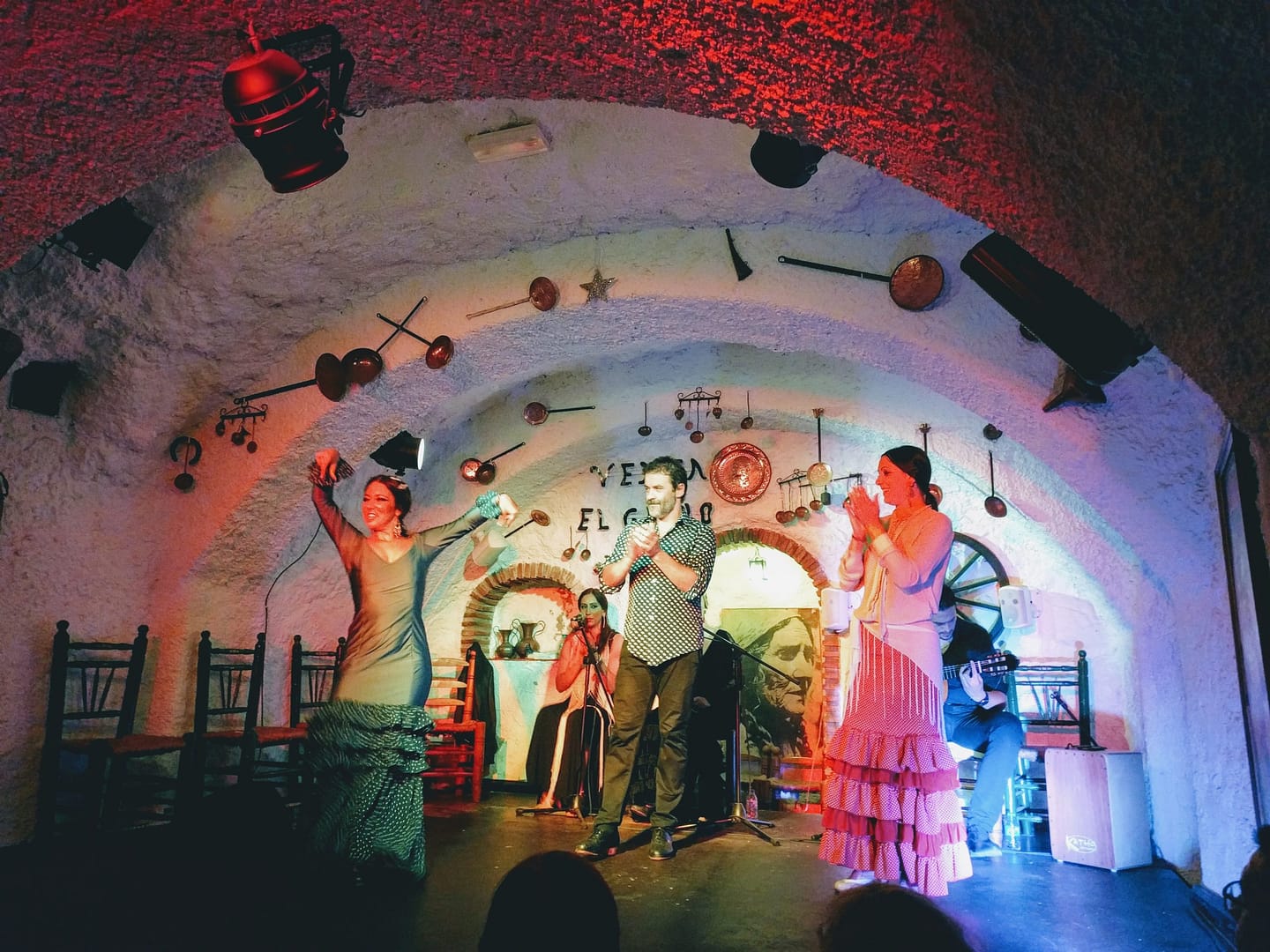
The word 'zambra' comes from 'zumra' (Arabic, meaning celebration) and the term 'zamara' (musicians). Zambra originated in Muslim weddings held in ancient Granada. The 'granaínos' gypsies adapted those rites and incorporated elements of their culture, giving birth to flamenco zambra. Unlike their performances in flamenco tablaos, the dancers present the show just a few centimeters away from the audience.

In the images, we can appreciate one of the finest flamenco artists in Granada, the flamenco singer Alicia Morales.

Blog

Latest Articles

Cómo llegar a la Alhambra

How to Get to the Alhambra?

If you're planning to visit the Alhambra, it's important to know the various ways to get to the monument, each with its own advantages and disadvantages. We'll provide you with detailed information about the access routes to help you make the best decision according to your needs.

Los Barrios del Albaicín y el Sacromonte

The neighborhoods of Albaicín and Sacromonte

Benefits of traveling alone, from the freedom to discover new places with new friends.

¿Qué Ver en Granada Centro?

What to See in Central Granada?

Must-Visit Places You Can't Miss in Granada. Curious about the essential sights in Central Granada? Let's start with the key monuments that stand out in the city center and are not to be missed.

Flamenco in Granada

en_GBENG
Logo entradas Alhambra

Entradas Alhambra

Datos de Contacto

Email

contacto@entradaalhambra.com

Telephone

Contacto +34605014891

Best Travel Theme

Elementor Demos

With Love Travel WordPress Theme you will have everything you need to create a memorable online presence. Start create your dream travel site today.

Logo entradas Alhambra
Privacy Summary

Esta web utiliza cookies para que podamos ofrecerte la mejor experiencia de usuario posible. La información de las cookies se almacena en tu navegador y realiza funciones tales como reconocerte cuando vuelves a nuestra web o ayudar a nuestro equipo a comprender qué secciones de la web encuentras más interesantes y útiles.